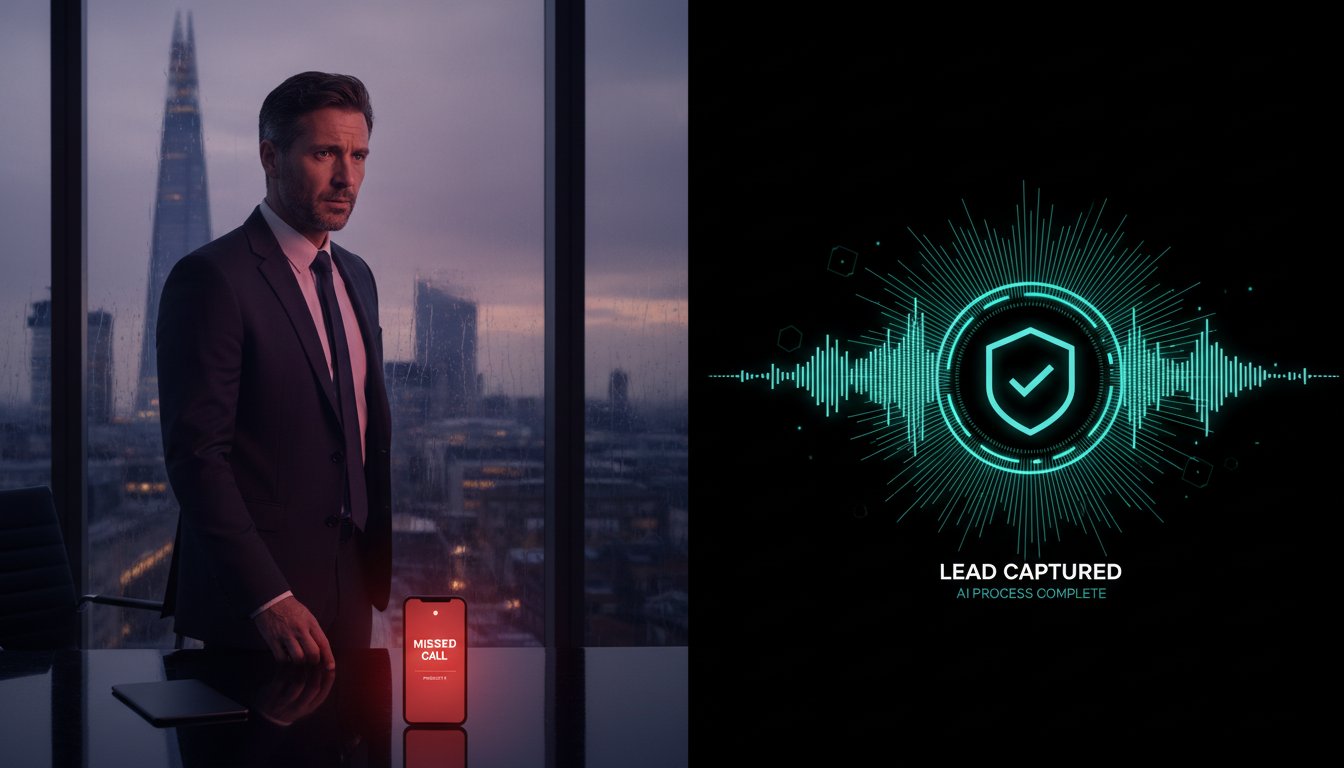

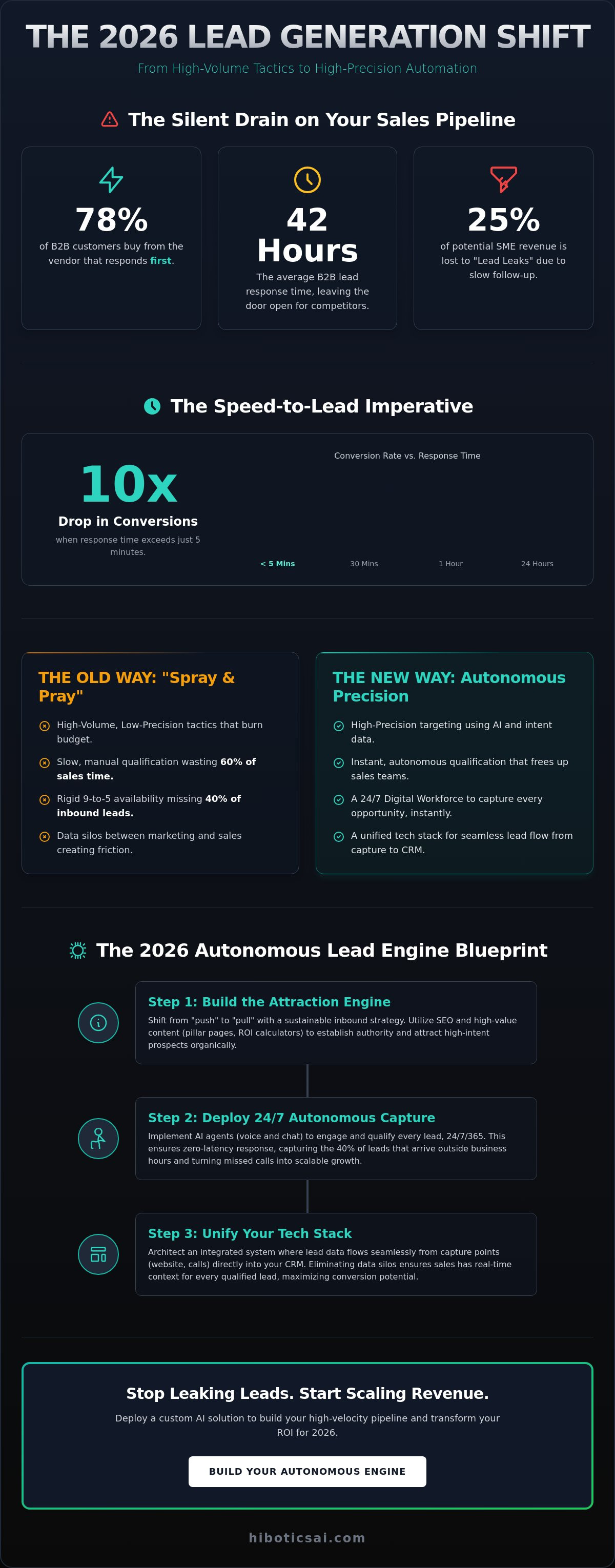
A 2024 study by LeadConnect shows that 78% of B2B customers buy from the vendor that responds first, yet the average response time still hovers at a sluggish 42 hours. You likely recognize this gap in your own operations. It’s exhausting to watch your marketing budget vanish into high cost-per-lead metrics because your lead generation strategies aren’t built for speed. You deserve a system that respects your time and your capital by eliminating the 60% of sales time currently wasted on unqualified prospects.
We’re going to show you how to bridge this gap by deploying autonomous systems that function as a 24/7 digital workforce. You’ll learn how to build a high-velocity engine that captures and qualifies prospects with surgical precision. This guide provides the exact blueprint to unlock a steady stream of high-intent leads and accelerate your ROI through custom AI solutions. We’ll explore the specific automated workflows and AI-driven frameworks you need to transform your pipeline into a scalable, self-sustaining asset for 2026.
Key Takeaways
- Shift from high-volume "spray and pray" tactics to high-precision autonomous targeting to drive elite conversion rates.
- Build a sustainable attraction engine using SEO and high-value content to establish long-term authority and trust.
- Master modern lead generation strategies by leveraging sales intelligence and firmographic data for precision prospecting.
- Deploy AI voice assistants to capture and qualify leads 24/7, turning missed calls into scalable growth opportunities.
- Eliminate data silos by architecting a unified tech stack that ensures seamless integration between lead capture and your CRM.
The Evolution of Lead Generation Strategies in 2026
Lead generation serves as the strategic bridge between initial brand awareness and final sales conversion. In 2026, this methodology has undergone a radical transformation. We've moved past the era of high-volume "spray and pray" tactics. Those outdated models relied on casting wide nets and hoping for a small percentage of interest. Today, success depends on high-precision autonomous targeting. Modern lead generation strategies prioritize intent data and AI-driven qualification to ensure every prospect in your pipeline is worth the pursuit.
Many SMEs suffer from a "Lead Leak" that silently drains revenue. This phenomenon occurs when qualified prospects drop out of the funnel due to friction or slow response times. Industry data suggests that the average SME loses 25% of potential revenue to these leaks. Traditional methods fail because they can't keep pace with an "instant-response" economy. Buyers expect immediate value. If you don't provide it, they'll find a competitor who will. Efficiency is the only currency that matters in 2026.
Understanding the 2026 Lead Lifecycle
The journey from an anonymous visitor to a Sales Qualified Lead (SQL) is now faster and more data-heavy. To master this flow, you must understand what is b2b sales in the context of a digital-first market. We categorize leads by intent signals rather than just demographics. Cold leads show minimal engagement. Warm leads interact with middle-of-funnel content. Hot leads demonstrate high-intent actions, such as visiting pricing pages or checking integration docs. AI identifies these signals in real time, allowing for instant segmentation and tailored outreach.
The "Speed to Lead" Imperative
Timing is everything. Research confirms that conversion rates drop 10x if you wait longer than five minutes to respond to an enquiry. For competitive SMEs, 24/7 availability isn't a luxury anymore. It's a survival requirement. Automation facilitates a zero-latency response, ensuring your brand engages the prospect while their interest is at its peak. By deploying lead generation strategies that include 24/7 AI agents, you capture the 40% of leads that typically arrive outside of standard business hours. This digital workforce ensures no opportunity is wasted, transforming your response time into a competitive advantage.
Inbound Lead Generation: Building Your Attraction Engine
Modern lead generation strategies prioritize pull over push. High-value content functions as your digital storefront, establishing authority before a salesperson ever speaks. By 2026, 80% of the B2B buyer journey will happen in digital channels according to Gartner research. This makes your organic presence a non-negotiable asset. You don't just want traffic; you want a self-sustaining system that attracts qualified prospects while you sleep.
SEO drives sustainable lead flow without the recurring costs of paid media. It's a strategic investment in long-term scalability. To capture high-intent traffic, integrate interactive tools like ROI calculators or maturity assessments. These tools provide immediate utility and capture user intent more effectively than a static PDF. They turn passive browsing into active engagement, allowing you to collect data that informs your follow-up process.
Social proof remains the ultimate trust accelerator. Incorporating case studies at the Top of Funnel (TOFU) reduces friction. Research from TrustRadius shows that 40% of buyers consider case studies the most influential content type. Use these assets to demonstrate real-world results and replace skepticism with confidence.
Content Marketing for High-Intent Prospects
Pillar content serves as the structural foundation of your lead attraction ecosystem. It's comprehensive, authoritative, and designed to answer every question a prospect has about a specific vertical. Map this content to specific pain points across the buyer journey. Don't just list features; solve problems. The shift toward frictionless value delivery is critical. Traditional gated content often creates barriers. Instead, offer 70% of your insights upfront. This builds the credibility required to secure a conversion later. When you provide value first, the lead quality improves.
Leveraging AI Marketing Tools for Inbound
Scaling content production without sacrificing quality requires a modern tech stack. You can utilize ai marketing tools to automate the heavy lifting of research and distribution. This allows your team to focus on high-level strategy rather than manual execution.
- AI-Driven SEO Audits: These tools provide real-time optimization suggestions. They analyze search intent shifts in seconds, ensuring your content stays relevant as algorithms evolve.
- Digital Workforce Integration: AI chatbots act as a 24/7 engagement layer. They engage readers instantly, answering queries and qualifying leads while your human team focuses on closing deals.
- Real-Time Personalization: AI analyzes visitor behavior to serve the most relevant content dynamically, increasing the likelihood of a conversion.
This level of custom AI solutions transforms your website from a static page into a dynamic conversion engine. It's about buying back your time and focusing on growth while automation handles the repetitive tasks of lead capture.
Outbound and Sales Intelligence: Precision Prospecting
Broad-spectrum cold calling is an obsolete relic. By 2026, successful lead generation strategies hinge on surgical precision rather than raw volume. You can't afford to waste expensive human resources on uninterested prospects. Modern outbound relies on sales intelligence to identify exactly who is ready to buy before your team even initiates contact. This shift transforms sales from a numbers game into a data-driven science.
Data drives every high-performing interaction. We leverage technographic data to see a prospect's current software stack and firmographic data to filter by specific growth metrics. This ensures your SDRs only engage with accounts that have a genuine, documented need for your solution. LinkedIn has evolved into a primary engine for B2B growth, where social selling replaces aggressive pitching. Building authority through consistent, value-driven engagement creates a warm entry point that beats cold outreach every time. It's about being visible where your prospects already seek solutions.
The Power of Sales Intelligence Platforms
Stop guessing and start tracking intent signals. Platforms like ZoomInfo or Apollo now provide real-time alerts when a target account searches for your specific category. These triggers are the lifeblood of efficient lead generation strategies. Focus on three primary catalysts to time your outreach perfectly:
- Job Changes: Data shows new executives often overhaul departments within their first 90 days.
- Funding Rounds: A Series B announcement signals an immediate, funded need for scalable infrastructure.
- Tech Stack Shifts: If a lead drops a competitor's tool, they're actively looking for a replacement.
Automated list building allows your team to skip the manual research phase entirely. It transforms your SDRs from researchers into closers, maximizing their hourly ROI and accelerating your sales cycle.
This degree of focus is essential in specialized markets; for example, BGS Capital applies these principles to the investment sector by connecting qualified investors with pre-IPO and IPO opportunities, ensuring every introduction is rooted in high-intent data.
Modern Cold Outreach Tactics
Generic email blasts are a fast track to the spam folder and a ruined domain reputation. In a saturated market, hyper-personalization is the only way to cut through the noise. Use AI to analyze a prospect's recent podcast appearance or a company's annual report to draft outreach that addresses their specific operational bottlenecks. This isn't just about using a first name tag; it's about demonstrating you understand their 2026 revenue goals.
High-impact teams now use a multi-channel framework to stay top-of-mind. A typical 12-day sequence might look like this:
- Day 1: LinkedIn connection request with a personalized, non-salesy note.
- Day 3: Value-heavy email focusing on a specific, solved pain point.
- Day 5: Short, 30-second personalized video message sent via DM.
- Day 8: Brief phone call to offer a specific resource or insight.
- Day 12: Final follow-up email with a low-friction call to action.
This approach respects the prospect's time while maintaining a persistent, professional presence. It allows your digital workforce to handle the heavy lifting of prospecting, freeing your human talent to focus on high-level strategy and closing deals.
Autonomous Lead Capture and Qualification: The 2026 Differentiator
Speed to lead is no longer a competitive advantage; it is a baseline requirement. In 2026, the gap between market leaders and laggards is defined by how they handle the first 60 seconds of a lead's interest. Traditional lead generation strategies often fail because they rely on human availability. If a prospect reaches out at 9 PM on a Sunday, they don't want a "we'll get back to you" email. They want a solution. Autonomous agents solve this by transforming your intake process from a passive form into an active, intelligent conversation.
AI Voice Assistants: The 24/7 Lead Capture Solution
An AI voice assistant is a digital receptionist that never sleeps and never misses a detail. This technology ensures your business is always open, capturing every high-intent caller even during peak hours or holidays. Implementing an ai voice assistant for small business operations allows you to scale your front-of-house capabilities without the overhead of a massive call center. When a lead hears a friendly, professional voice immediately, the psychological impact is profound. It builds instant trust and validates their decision to contact you. You aren't just capturing data; you're starting a relationship.
Automated Qualification and Appointment Booking
Capture is only half the battle. The real value lies in the intelligence of the interaction. Modern agents perform rigorous ai lead qualification by asking specific, dynamic questions based on your unique MQL criteria. They can determine budget, authority, and timeline within a natural dialogue. If the lead meets your standards, the agent moves straight to ai appointment scheduling, placing a confirmed meeting directly onto your sales team's calendar. This hands-off pipeline ensures your closers spend 100% of their time on high-value conversations rather than chasing tire-kickers.
The cost-to-value ratio of these autonomous systems is undeniable. A single AI agent can handle hundreds of concurrent calls for a fraction of the cost of one human SDR. You eliminate the expenses of recruitment, training, and benefits while gaining a worker that improves with every interaction. Data from early 2025 shows that businesses moving to autonomous capture see a 40% reduction in lead-to-close cycles. You're buying back time for your core team to focus on strategy and high-level negotiation.
- Instant Response: Zero wait times for every incoming lead.
- Dynamic Filtering: Only high-quality prospects reach your sales team.
- Infinite Scalability: Handle 10 calls or 1,000 calls with the same precision.
- Clean Data: Every interaction is transcribed and synced with your CRM automatically.
Stop losing revenue to missed calls and slow follow-ups. You can automate your sales pipeline today and secure your growth for 2026.
Building Your Integrated Lead Generation Tech Stack
Modern lead generation strategies rely on more than just high-quality traffic. They require a technical backbone that ensures no prospect falls through the cracks. A fragmented stack undermines even the most sophisticated campaigns. Disconnected data sources create silos that stall growth and frustrate your sales team. Effective crm integration acts as the central nervous system of your business, bridging the gap between initial capture and final conversion.
To build a stack that communicates flawlessly, use this selection checklist:
- Bidirectional Syncing: Ensure data flows both ways between your marketing tools and CRM to keep lead scores accurate.
- Native API Support: Prioritize tools that connect without complex middleware to reduce latency.
- Granular Attribution: Your stack must track the specific touchpoint that triggered the conversion.
- Scalable Architecture: Choose platforms that can handle a 300% increase in lead volume without performance degradation.
Measuring ROI requires looking beyond the cost-per-lead. Successful firms calculate the total value of the funnel by comparing Customer Acquisition Cost (CAC) against the Lifetime Value (LTV) of leads generated through specific channels. When your tech stack is unified, you can see exactly which lead generation strategies produce the highest margins, allowing you to reallocate budget in real time.
The Blueprint for a Unified Digital Workforce
In 2026, the most efficient teams operate as a single unit comprising AI agents, CRMs, and human experts. AI agents handle 90% of the heavy lifting in lead qualification. They engage prospects instantly, extract intent, and update the CRM within seconds. This real-time data syncing ensures that when a human sales rep steps in, they have a complete history of the interaction. The automated flow looks like this: A prospect triggers an AI agent; the agent qualifies the lead based on custom parameters; the CRM creates a detailed profile; a high-priority notification reaches the human rep. This synergy eliminates lead decay and maximizes every opportunity.
Next Steps: Scaling Your Lead Engine
Identify your primary bottleneck immediately. If your traffic is high but conversions are low, focus on your capture mechanisms. If your lead volume is high but sales are stagnant, optimize your qualification model. Continuous testing is the only way to maintain a competitive edge. HiBotics AI specializes in building the custom AI solutions necessary for this level of autonomous growth. We don't just provide tools; we act as your strategic partner to transform your operations into a high-output lead engine. Stop managing manual workflows and start scaling with precision. Contact HiBotics AI to unlock your full growth potential.
Master Your 2026 Growth Engine
The landscape of 2026 demands a shift from passive collection to active, autonomous capture. You've learned that a modern tech stack isn't just a convenience; it's the vital backbone of your entire sales operation. High-performing teams are already replacing fragmented, manual workflows with integrated sales intelligence to maintain a competitive edge. Mastering these lead generation strategies means the difference between scaling your revenue effortlessly and fighting for every scrap of market share in an increasingly crowded digital marketplace.
Industry data indicates that companies lose 30% of their leads simply because they hit a voicemail or wait too long for a human callback. That's a massive revenue leak you can plug right now. By deploying an AI-driven workforce, you qualify prospects and book appointments on autopilot while you sleep. Our systems offer seamless CRM integration with platforms like HubSpot and Salesforce, ensuring every data point flows exactly where it belongs without manual entry.
Don't let your competitors outpace you with superior technology. Unlock your 24/7 lead engine with HiBotics AI and reclaim your time for high-level strategy. The tools for limitless growth are within your reach. Your most successful year starts today.
Frequently Asked Questions
What are the best lead generation strategies for small businesses with limited budgets?
Leverage AI-driven LinkedIn outreach and organic video content. These lead generation strategies allow small firms to compete without massive ad spend. LinkedIn generates 3x higher conversion rates than other social platforms according to HubSpot data. Focus on building a digital workforce that automates initial touchpoints. This buys back time for your sales team to close deals and scale your business efficiently.
How does AI lead qualification differ from traditional lead scoring?
AI lead qualification analyzes intent and sentiment in real-time rather than relying on static point systems. Traditional scoring weights a whitepaper download heavily, but AI detects if the lead's actual queries signal a readiness to buy. Gartner indicates that businesses using AI for qualification see a 20% boost in sales productivity. It transforms a guessing game into a precise, data-driven science that maximizes your team's output.
Can an AI voice assistant really handle complex customer enquiries?
Modern AI voice assistants manage complex, multi-turn dialogues with 95% accuracy in intent recognition. They don't just follow scripts; they leverage Large Language Models to interpret context and solve problems. By 2026, 70% of initial customer interactions occur through these autonomous systems. This ensures your lead funnel remains active 24/7 without increasing your headcount. It's a powerful tool for maintaining scalable customer engagement around the clock.
What is the "Lead Leak" and how can I calculate it for my business?
Lead leak identifies the revenue lost when prospects drop out of your funnel due to friction or delay. Calculate it by subtracting your actual conversion rate from your industry's top 10% benchmark. Harvard Business Review found that companies responding within 5 minutes are 7x more likely to have meaningful conversations. If your response time exceeds 10 minutes, you're likely losing 40% of potential revenue to faster competitors.
How long does it take to see an ROI from automated lead generation?
Expect a positive ROI within the first 90 days of deploying automated lead generation strategies. The initial 30 days focus on integration and data training, while the following 60 days capture accelerated conversion data. Nucleus Research reports that advanced automation delivers an average return of $8.66 for every dollar invested. You'll see immediate gains in operational efficiency and lead response speed that translate into tangible growth.
Is outbound lead generation still effective in 2026?
Outbound lead generation remains a powerhouse when you replace generic blasts with AI-driven precision. Cold outreach in 2026 relies on hyper-personalization that references specific prospect pain points and recent company news. Salesloft data confirms that personalized outreach generates 2x the response rate of traditional methods. It's about quality and relevance, not just volume. Use automation to scale this personalization across your entire target market for maximum impact.
How do I integrate an AI lead capture system with my existing CRM?
Integrate your AI system using direct API connections to ensure seamless data flow between platforms. This allows your CRM to update lead profiles instantly without manual entry. Industry reports show 80% of high-growth companies automate this sync to maintain data integrity and speed. It eliminates silos and ensures your sales team works with the most current intelligence available. Automation keeps your data clean and your workflows fast.
What is the difference between an MQL and an SQL in an automated funnel?
Marketing Qualified Leads (MQLs) interact with your top-of-funnel content, while Sales Qualified Leads (SQLs) meet specific budget and intent criteria. In an automated funnel, AI identifies the exact moment an MQL shifts to an SQL based on behavioral triggers. Forrester research shows that automated nurturing leads to a 50% increase in sales-ready prospects. This precision prevents your sales team from wasting time on cold leads that aren't ready.